
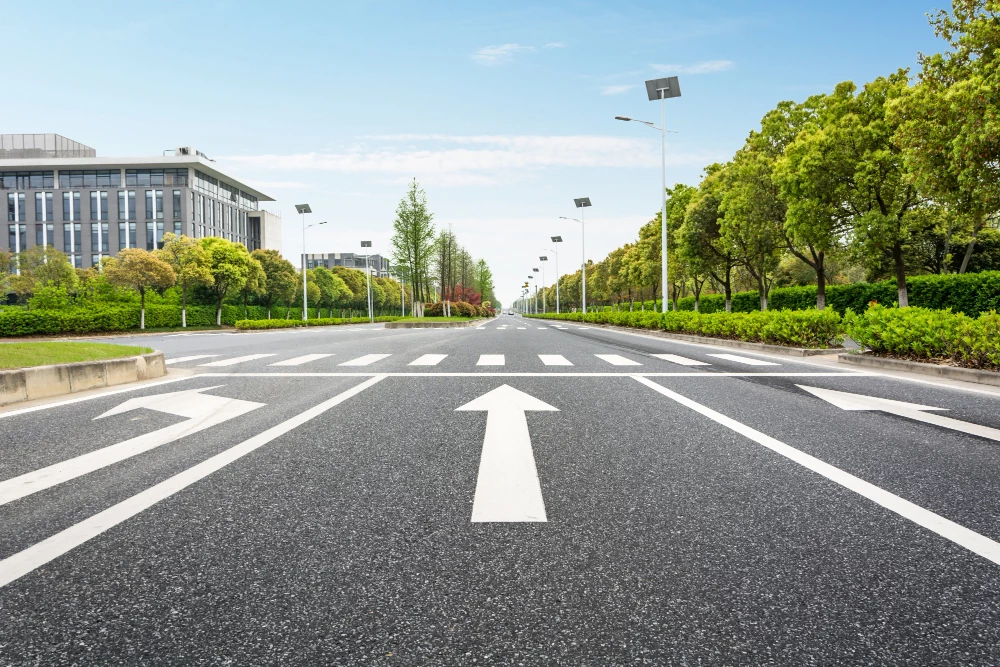
Thermoplastic Road Markings in Swansea
Contact UsAt AM Surfaces, we specialise in thermoplastic road markings for a range of surfaces in Swansea. Our markings are designed to improve road safety and visibility, using durable thermoplastic materials that are ideal for roads, car parks, and other traffic areas.
Our expertise covers various applications from pedestrian crossings to cycle lanes, ensuring compliance with road safety standards across the SA4 3 area. Contact us to discuss your project requirements today.
What Is Thermoplastic Road Markings?
Thermoplastic road markings are essential for delineating lanes and enhancing traffic safety. At AM Surfaces, we use thermoplastic material for its durability and reflective properties, providing clear and long-lasting markings.
These markings are typically composed of a polymer resin mixed with glass beads and titanium dioxide, which contribute to their reflectivity and colour vibrancy. We apply the markings using specialised equipment, such as thermoplastic screed machines, ensuring consistent thickness and adhesion.
Our application is suitable for a variety of surfaces including asphalt and concrete, making it versatile for motorways, urban roads, and car parks. The properties of thermoplastic allow it to mould into the road surface during application, further enhancing its durability.
This material is ideal for high-traffic areas because it withstands wear and tear, helping to reduce maintenance costs. Our team ensures correct application to meet Traffic Signs Regulations and General Directions (TSRGD) standards, optimising safety for all road users.
What Types of Thermoplastic Road Markings Are Available in Swansea?
AM Surfaces provides a range of thermoplastic road marking options to suit different needs. Our line markings are essential for clear lane divisions, edge markings, and road delineations, and are highly durable under heavy vehicular traffic.
We also offer custom symbols, arrows, and legends to provide precise directional guidance, meeting the standards set by the Department for Transport.
Our pedestrian crossings are designed with high visibility to ensure safety for all foot traffic. These crossings typically use skid-resistant materials to prevent accidents in wet conditions.
Speed roundels are another crucial element, clearly highlighting speed limits to promote effective traffic control and enhance road safety. We use precision stencils and thermoplastic compounds that meet BS EN 1436:2018 standards to ensure longevity and effectiveness.
For a competitive quote or consultation, contact us today.
What Surfaces Do Thermoplastic Road Markings Work On?
Our thermoplastic road markings are suitable for a wide variety of surfaces. Common applications include tarmac, concrete, and asphalt, where the thermoplastic material provides excellent adherence and long-lasting durability.
The markings are applied using high-temperature equipment to melt the thermoplastic, usually incorporating reflective glass beads for enhanced visibility at night and in adverse weather conditions.
Whether applied to new surfaces or over existing markings, our thermoplastic solutions ensure clarity and endurance. However, we do not recommend application on surfaces that are not stable or have debris, as this can affect adherence and lifespan.
It is crucial to prepare the surface through cleaning, drying, and priming for best results. Our clients include municipalities, commercial properties, and industrial sites, each benefitting from the customisable colour options and compliance with highway safety standards.
Contact us to discuss your project requirements and surface preparation needs.
When Are Thermoplastic Road Markings Needed in Swansea?
Thermoplastic road markings are needed when visibility, safety, and traffic organisation are paramount. These markings are particularly necessary in high-traffic areas, such as busy intersections and parking facilities, especially during resurfacing projects or when existing markings fade.
They provide durability and excellent retroreflectivity, enhancing driver visibility both during the day and at night.
Our thermoplastic road markings align with the standards set by the Department for Transport, ensuring compliance with road safety regulations. This type of marking is especially beneficial in areas with frequent rainfall, as the materials offer superior skid resistance.
The application involves specialist equipment, such as pre-heaters and extrusion cart machines, which enable precise and rapid deployment. Thermoplastic markings can also incorporate non-slip aggregates and glass beads for added reflectivity and traction.
At AM Surfaces, we offer solutions tailored to meet regulatory and safety standards, ensuring efficient and safe traffic management. Contact us today to discuss how our services can improve roadway safety and organisation in Swansea.
How Does Thermoplastic Road Markings Work?
Thermoplastic road marking is a specialised process that ensures durable and visible markings. Initially, surface preparation is crucial, involving cleaning the road surface of any debris, dust, or oil to ensure optimal adhesion.
We often use high-pressure water jets and mechanical sweepers to achieve a surface.
Next, the thermoplastic material, composed of resins, plasticisers, and glass beads, is heated to between 180 and 200 degrees Celsius. The glass beads are essential for retro-reflectivity, enhancing nighttime visibility.
Once melted, specialised equipment like screed, extrude, or spray applicators are employed to apply the material precisely onto the road, forming lines or symbols.
After application, the thermoplastic needs to cool rapidly, a process which often takes five to ten minutes to ensure it adheres firmly and provides long-lasting results. Our expertise lies in balancing speed and precision, ensuring roads are marked effectively with minimal disruption.
Contact us to discuss your project requirements.
How Long Does Thermoplastic Road Markings Take?
Thermoplastic road marking application typically takes one to two days, depending on the project scale and site conditions. We use specialised equipment such as road marking machines fitted with thermoplastic pre-heaters to ensure consistent application.
The marking is usable almost immediately after cooling, which takes about 15 to 30 minutes under normal conditions. This quick setting time ensures minimal disruption to traffic flow.
The process involves spraying or extruding molten thermoplastic material onto the prepared surface, where it adheres strongly as it cools. For enhanced visibility and durability, glass beads can be added to improve retroreflectivity.
We comply with the BS EN 1436 standard for road safety markings in the UK, ensuring the markings are slip-resistant and durable. This makes it suitable for a variety of environments, including busy city roads and rural pathways.
Contact us to discuss your specific project needs in Swansea.
Who Needs Thermoplastic Road Markings in Swansea?
Clients who benefit from our thermoplastic road marking services include local councils, construction companies, commercial property managers, and private businesses. These markings are essential for organisations looking to maintain safe and efficient traffic systems within their properties or regions.
Thermoplastic road markings are known for their durability and rapid application capability, making them an ideal choice for busy urban areas that require minimal disruption. With a lifespan of several years, these markings contain reflective glass beads that enhance visibility in low light conditions, complying with BS EN 1436 standards.
We use specialised equipment, such as hot melt kettles, to ensure precise application and conformity with specified thickness requirements, typically between 2mm and 4mm.
By opting for thermoplastic markings, our clients can address issues like traffic congestion and pedestrian safety effectively. Our service is designed to cater to all types of surfaces, ensuring comprehensive coverage across various environments.
Contact us to discuss your specific project requirements.
How Much Does Thermoplastic Road Markings Cost in Swansea?
Thermoplastic road markings typically cost between £4 to £15 per metre in Swansea. Pricing depends on factors such as the type of marking, area size, and surface condition.
For instance, applying centre lines, edge lines, or arrows may affect the final cost due to varying material quantities and application methods required. The durability of thermoplastic, thanks to its high reflectivity and longevity, often offers better value over time compared to other marking systems like paint.
Projects on worn or uneven surfaces may need preparation work, such as cleaning or priming, to ensure adhesion. Custom designs or symbols may incur additional costs, particularly if a stencil needs to be produced.
We provide detailed quotes to meet your specific project requirements, ensuring transparency and cost-effectiveness. Contact us for a personalised assessment of your marking needs.
What Are the Benefits of Thermoplastic Road Markings in Swansea?
Thermoplastic road markings provide several benefits in Swansea. They are formulated with a blend of synthetic resins, pigments, and glass beads, ensuring their durability and visibility in various conditions.
These markings comply with BS EN 1436, a standard that specifies performance requirements for road traffic signs.
Durability: Long-lasting, even in high-traffic areas, thanks to their abrasion resistance.
Visibility: Enhanced reflectivity for improved night-time visibility, supported by embedded glass beads that reflect headlights more effectively.
Quick Application: Minimal disruption with fast setting times, which can be accomplished with specialised equipment like thermoplastic kettles and application machines.
Cost-Effective: Reduced maintenance expenses over time and an extended life cycle compared to other materials means fewer reapplications are required.
These qualities make thermoplastic road markings suitable for a range of environments, from motorways to car parks. Consider this solution for your projects to ensure safety and longevity.
Why Choose AM Surfaces for Thermoplastic Road Markings in Swansea?
Choosing AM Surfaces for thermoplastic road markings in Swansea ensures you receive expert service with high adherence to safety standards. Our experienced team uses industry-leading equipment and materials to deliver reliable and precise markings.
We employ hot-applied thermoplastic materials, known for their durability and visibility, especially in varying weather conditions. Our application process uses advanced striping machines to ensure clean lines with consistent thickness, crucial for maintaining road safety.
We are committed to providing tailored solutions that maximise safety and efficiency, catering to a wide range of clients such as local councils, commercial property managers, and large infrastructure projects. We ensure compliance with UK Department for Transport specifications, including BS EN 1436 for road marking performance.
Whether it's car parks, highways, or pedestrian crossings, our expertise ensures that all markings meet both functional and aesthetic needs. Contact us today to discuss how we can enhance your road infrastructure.
Frequently Asked Questions
Can thermoplastic road markings be applied in wet conditions in Swansea?
No, thermoplastic road markings require dry conditions in Swansea to ensure proper adhesion.
What maintenance is required for thermoplastic road markings in Swansea?
Routine inspections in Swansea ensure markings remain visible and effective. Repairs can be made as needed.
Get a Free Quote for Thermoplastic Road Markings in Swansea
Enhance road safety and visibility with AM Surfaces.
We cover Swansea